
Awakenings
dir. Penny Marshall · 1990
The experience of being alive is defined not just by physical existence, but by the capacity for connection, understanding, and the rediscovery of one's humanity.
"Awakenings" takes you on a poignant journey of rediscovery, where the profound impact of human connection illuminates the beauty of life's simple pleasures. Penny Marshall crafts a heartfelt narrative that not only awakens its characters but also stirs the soul of the viewer, making it a must-see for those who appreciate the redemptive power of empathy.
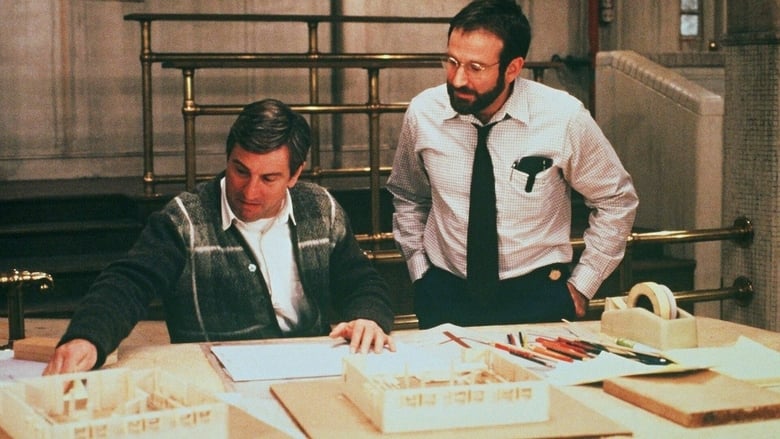
Dr. Malcolm Sayer, a shy research physician, uses an experimental drug to "awaken" the catatonic victims of a rare disease. Leonard is the first patient to receive the controversial treatment. His awakening, filled with awe and enthusiasm, proves a rebirth for Sayer too, as the exuberant patient reveals life's simple but unutterably sweet pleasures to the introverted doctor.
Full synopsisspoilers
1969. Dr. Malcolm Sayer is hired as a clinical physician at a local hospital in the Bronx, despite he only having a research background. The job is not ideal on his side as he has difficulties relating to people which is the reason he has focused on research projects not involving human subjects, while the hospital hires him somewhat out of desperation in not finding anyone else with the qualifications who wants the job. Most of his patients are in a semi-catatonic state and are housed in what some of the orderlies coin the "garden" ward, where all they can do for the patients is water and feed them.
He notices that some of the patients, despite their generally catatonic state, respond in unusual ways to certain stimuli. In doing some research, he also finds that some common bonds between these patients are that they suffered from encephalitis in the 1920s or 1930s, and that their physical states are like they have Parkinson's disease frozen in time. As such, he is able to convince, albeit reluctantly, his skeptical boss, Dr. Kaufman, to administer an expensive experimental drug therapy on only one patient with family consent. That patient is forty-one year old Leonard Lowe, who has been in his current state since he was eleven years old, and who has been supported by his loving mother through all these years.
As the drug therapy "awakens" Leonard, there are several issues that come into play. Malcolm has to try and convince Kaufman and the hospital administration to extend the therapy to the other patients. Despite not knowing the long term effects, Leonard, who was aware of his surroundings through his catatonic state, may have mixed emotions about his situation, wanting both to be treated as human being and an experiment guinea pig to ensure that what is happening benefits him and others in the long run. Mrs. Lowe may be unprepared for the new Leonard, she expecting who she remembers as a sweet eleven year old boy.
Through all these issues, what may be the most illuminating issue for Malcolm is the need to stimulate the human spirit, including his own in dealing with people around him.