Exhuma
dir. Jang Jae-hyun · 2024
Interfering with the past can unleash unforeseen consequences that challenge our understanding of life and death.
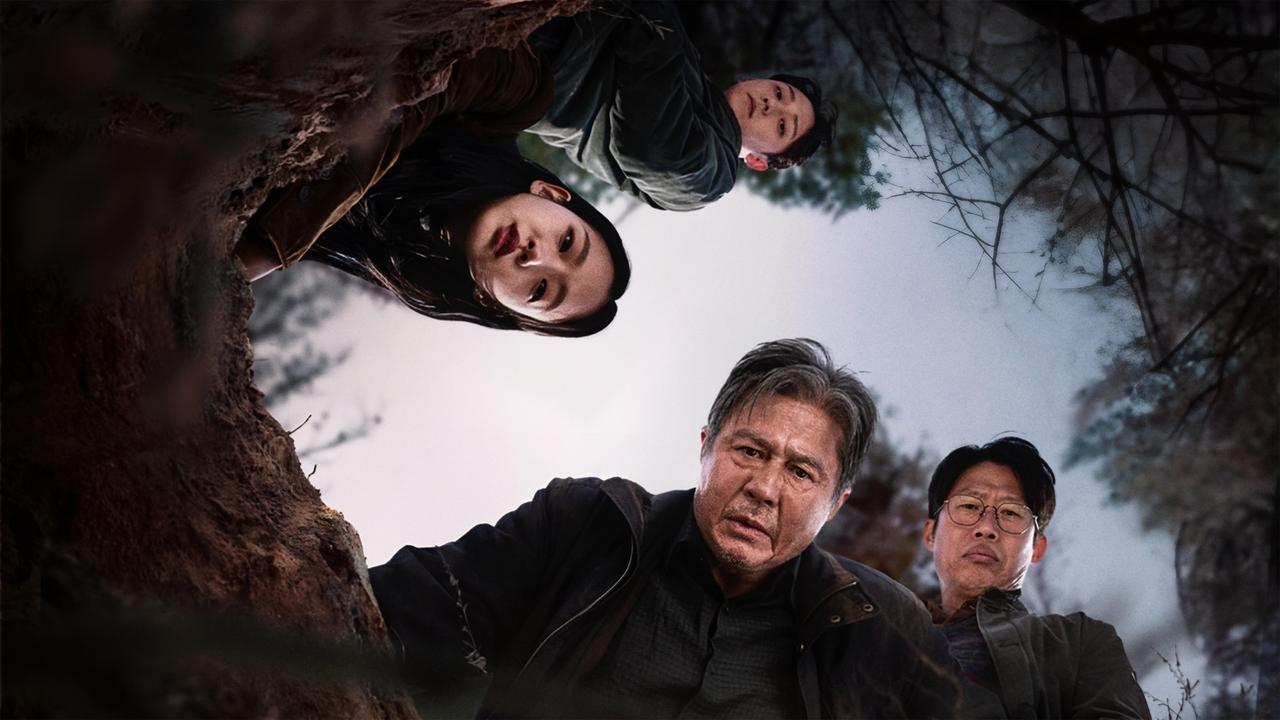
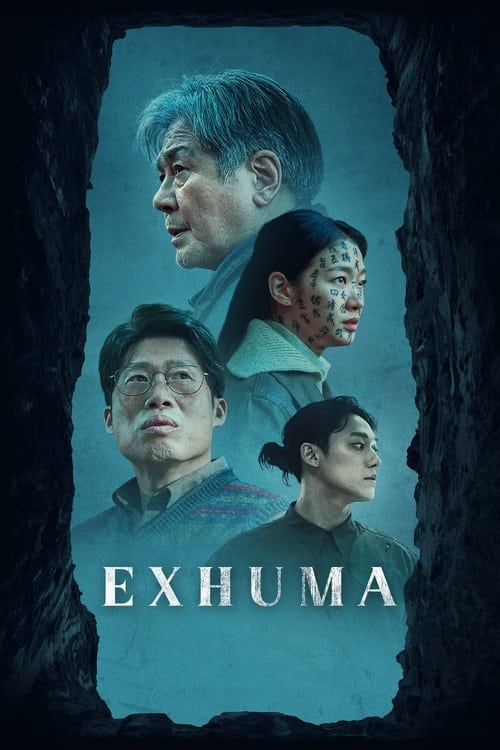
A team of paranormal experts uncovers a chilling secret when they disturb a wealthy family's ancestral gravesite. As they delve deeper into the mystery, they find themselves ensnared in a web of supernatural retribution that tests their sanity and morality. Watching it is like being drawn into a dark labyrinth where every turn reveals more horrors lurking just beneath the surface.
After tracing the origin of a disturbing supernatural affliction to a wealthy family's ancestral gravesite, a team of paranormal experts relocates the remains—and soon discovers what happens to those who dare to mess with the wrong grave.
Behind the film
Exhuma was the first Korean occult film to reach ten million admissions, and it is built from things a Korean audience brings into the cinema: the belief that where a grave lies decides a family's luck, the rites of shamans, and the Japanese occupation of 1910 to 1945.
Why a grave can curse a family
Pungsu-jiri, Korea's form of feng shui, comes from the same Chinese yin-yang and Five Phases thinking that Taoism draws on. It reads land for gi, an energy that runs along ridges and water, and a site where gi gathers is a myeongdang. An ancestor buried in one passes that energy down to the descendants. An ancestor buried badly passes down misfortune, which is why the family in Exhuma pays to have a grave dug up.
The Korean title, Pamyo, means breaking open a grave, the first step in moving remains to better ground. Families still do it. Queen Myeongseong moved her father's grave four times, President Kim Dae-jung moved his parents' tombs, and an estimated 20,000 geomancers work in South Korea today.
Named for the independence movement
Korean viewers noticed that the four leads share names with independence fighters, and Jang Jae-hyun answered with "no comment". Sang-deok the geomancer shares his with Kim Sang-deok, who after liberation chaired the first committee to investigate collaborators with Japan. Young-geun the undertaker shares his with Go Young-geun, who assassinated a Korean officer involved in the murder of Empress Myeongseong. The shaman Hwa-rim is named like Lee Hwa-rim, who joined the March 1st Movement at fourteen, and her apprentice Bong-gil like Yun Bong-gil, who threw a bomb at a Japanese military celebration in Shanghai's Hongkou Park in 1932. Even Hwa-rim's fellow shamans, Ok Gwang-sim and Park Ja-hye, carry activists' names.
The number plates keep the count. Sang-deok drives 0815, Liberation Day. Hwa-rim and Bong-gil's car is 0301, for the March 1st Movement of 1919, and Young-geun's hearse is 1945.
The rites on screen
Hwa-rim leads a gut, a shaman's rite of drumming, chanting, dance and offerings. Hers is a daesal-gut, which turns a deadly force aside onto sacrificed animals. Jang shot the rite as close to a real one as he could: the pig carcasses are real, computer effects were kept to a minimum, and the working shamans Lee Da-young and Gochunja coached Kim Go-eun and Lee Do-hyun, with Lee Da-young performing protective rites for the cast while the scenes were filmed. Bong-gil's tattoos are Buddhist scripture, worn for protection.
The tiger's spine
The Baekdudaegan, the ridge running the length of the peninsula, is read in geomancy as Korea's spine. Around 1903 the Japanese geologist Koto Bunjiro likened the peninsula's outline to a rabbit. In 1908 the Korean magazine Sonyeon printed a map of the peninsula as a roaring tiger instead, and Koreans have drawn it as a tiger since.
Did Japan really drive stakes into the mountains?
The belief is called soemalttuk: that the colonial government hammered iron stakes into Korea's mountains to cut the land's energy and stop great leaders being born. In 1985 a climbing club pulled 27 rods off Bukhansan and gave 15 to the Independence Hall. The belief peaked in 1995, when the Japanese Government-General building in Seoul began coming down on the fiftieth anniversary of liberation.
No document shows any such plan. Many of the rods were survey or trail markers and some were left by shamans, and the fear is older than the occupation: in the 18th century King Jeongjo blamed stakes planted by the Chinese. A character in Exhuma concedes that 99 percent of the claims proved false, and Jang said he kept the story because nobody knows either way.
What is buried under the gravespoilers
Beneath the grandfather's coffin stands a second one, upright and bound in wire, in a layered burial called cheopjang that hides one grave beneath another. The grandfather was a collaborator with the colonial state, and his ghost is the first of three enemies. The second is a sorcerer called Gisune, a play on kitsune, the Japanese fox spirit. The third is the corpse of a general from Japan's invasion of Korea in 1592 to 1598, the Imjin War, so one grave holds a collaborator, a colonial occultist and a far older invasion.
The clue that the fox has cut the tiger's waist puts the stake halfway down the spine, and from the grave Sang-deok can see North Korea. Critics read the stake as sitting where the peninsula would later be divided.
The general is fire and metal, and steel cannot touch him. In Five Phases thinking water and wood overcome those two, so Sang-deok fights him with wood soaked through. The team also notices he will not touch the scripture on Bong-gil's skin, and before the last fight they paint verses over their own faces and bodies.
Sources
- Minsoo Kang, "Exhuming a Historical Myth", Los Angeles Review of Books, on the iron-stake story and what the rods turned out to be: lareviewofbooks.org/article/exhuming-a-historical-myth/
- Soohee Kang, "Who Severed the Tiger's Spine?", Flow, on the peninsula as a tiger and the film's reading of the division: www.flowjournal.org/2024/08/who-severed-tigers-spine/
- Korea JoongAng Daily, on geomancy, relocated graves, and the rods pulled off Bukhansan in 1985: www.koreajoongangdaily.com/entertainment/feng-shui-and-urban-leg
- K-Occult, on pungsu-jiri, the daesal-gut and the layered burial: koccult.com/originals/unearthing-the-occult-exhuma-folklore
- Insight, 5 March 2024, on the four leads' namesakes: www.insight.co.kr/news/463445
- Wikitree, 27 February 2024, on which character drives which number plate: www.wikitree.co.kr/articles/930457
- Kyunghyang Shinmun, 23 February 2024, Jang Jae-hyun on the film's making: www.khan.co.kr/article/202402231840167
- Sportskeeda, on the shamans who coached the cast and worked the set: www.sportskeeda.com/pop-culture/news-we-went-protect-exhuma-film
- A genealogy of tiger nationalism in Korea, International Journal of Asian Studies, on the rabbit and the tiger: www.cambridge.org/core/journals/international-journal-of-asian-s