Resident Evil
dir. Zach Cregger · 2026
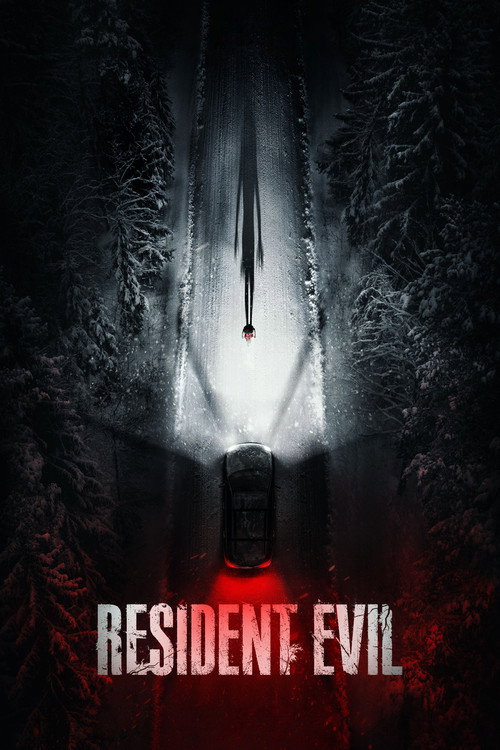
A hapless courier finds himself trapped in a remote hospital as a terrifying outbreak unfolds, forcing him to confront hordes of mutated creatures. The film immerses viewers in a relentless atmosphere of tension and dread, where every moment counts and survival hinges on quick thinking and moral choices.
Follows a hapless courier tasked with delivering a package to a remote hospital. He soon finds himself caught in the middle of an outbreak and must fight through hordes of mutated creatures to survive.
Behind the film
Zach Cregger's Resident Evil tells its own story. The company chasing its characters, though, is the one the games spent three decades building out in exhaustive detail, all of it sourced below. Here are six pieces of that backstory, none of them from this movie.
Traced to a flower
In 1966, Oswell Spencer, Edward Ashford and James Marcus followed a West African tribal legend to a real flower, the Stairway to the Sun, which grew in the ruins of the ancient Ndipaya Kingdom. The Ndipaya had used it for centuries to choose their kings: whoever survived the ritual gained an extended lifespan, and the flower carried a retrovirus that could, in rare survivors, produce genuine superhuman traits. Most who tried it did not survive at all. Spencer, Ashford and Marcus then built Umbrella Pharmaceuticals to fund cultivating it.
Chasing the wrong result
Umbrella's founders wanted a virus that could reliably enhance a person. Chasing that goal took the company somewhere else entirely: researcher William Birkin's work on a weaponizable strain turned hosts into what the games call Zombies, an outcome the company's own scientists treated as a research dead end. The product Umbrella actually wanted to sell to militaries was the controllable kind: the Hunter, the Tyrant, the Licker, built to take orders.
A company town
By 1998, close to a third of Raccoon City's population worked for an Umbrella subsidiary, and the city's growth for three decades had run on Umbrella's money. Its main U.S. research facility, the NEST, opened there in 1991 for G-Virus research. When the virus got loose, Raccoon General Hospital went under strict quarantine within weeks, and by October the U.S. government had decided containment meant erasing the city outright.
The outbreak was a field test
Umbrella didn't only lose control of Raccoon City. Once the outbreak was underway, both its U.S. and European divisions used the city as a live proving ground, sending in experimental B.O.W.s under orders to record how they performed in real combat. Employees who left the company later sold some of that same weapons stock on the black market.
A body that won't stay down
The games' V-ACT process lets a dormant strain of the virus reactivate once a host's body is critically damaged, triggering a second wave of mutation. The first documented case turned a corpse into what Umbrella's own researchers named a Crimson Head: faster, clawed, and still coming. Disabling the body does not stop the reactivation; only destroying it does.
When more than one host is involved
In the games, the Uroboros virus was built to absorb other infected tissue and grow by incorporating it, and later Progenitor-derived strains produced creatures assembled from more than one host fused into a single mass. The company's engineers never fully solved for what happens when the virus is given more than one body to absorb.
Sources
- Resident Evil Wiki, "Stairway to the Sun": residentevil.fandom.com/wiki/Stairway_of_the_Sun
- Resident Evil Wiki, "Progenitor Virus": residentevil.fandom.com/wiki/Progenitor_Virus
- Resident Evil Wiki, "Bio Organic Weapon": residentevil.fandom.com/wiki/Bio_Organic_Weapon
- Resident Evil Wiki, "Umbrella Corporation": residentevil.fandom.com/wiki/Umbrella_Corporation
- Resident Evil Wiki, "Raccoon City": residentevil.fandom.com/wiki/Raccoon_City
- Resident Evil Wiki, "V-ACT": residentevil.fandom.com/wiki/V-ACT
- Resident Evil Wiki, "Uroboros Virus": residentevil.fandom.com/wiki/Uroboros_Virus
Talking points
- the ethics of survival in crisis
- the portrayal of mutated beings as societal fears
- the impact of isolation on mental health
- the role of the courier as an everyman hero