the 1997 asian financial crisis
7 titles
Films about the 1997 Asian financial crisis, when Thailand floated the baht, South Korea took an IMF bailout and Suharto resigned in Indonesia.
Two put the crisis itself on screen. Three stories run side by side in Default. A Bank of Korea official warns her director of a coming national financial crisis and is ignored, a financial consultant quits to bet on the crisis, and the owner of a small tableware factory signs a contract that pays him in little more than a promissory note. The IMF's managing director arrives one week before the country goes bust. In Big Deal the crisis is one company: Gukbo, the biggest soju company in South Korea, is close to bankruptcy, and a young associate at a global investment firm comes home to buy it as his first target. The film is loosely based on the sale of Jinro, a real soju maker, during the same crisis.
Two more start once the crisis has already cost someone a job or a business. In 6ixtynin9, a woman in Bangkok is fired from a financial company during the crisis and goes home with no money, until she finds a box of cash outside her door and decides to keep it. The people who left it want it back. Peppermint Candy starts later and with more gone. At a reunion of old friends in 1999, Yeong-ho climbs a railroad bridge, having lost his family, his money and his business, and critics read his ruin alongside the country's. Seven episodes of his life then run backward from there, through twenty years of South Korean history.
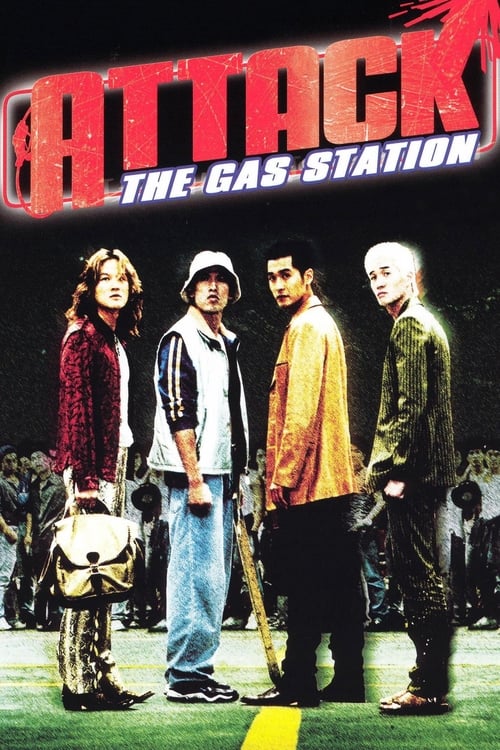
Two more keep the crisis at the edge of the frame. Attack the Gas Station! came out in October 1999 and follows four disaffected youths who rob a Seoul gas station and then decide to rob it again; its allusions to the IMF crisis are mostly framed slogans promoting a productive work force, which a character tears down. In Forgotten, a family moves into a new home in Seoul in 1997, and the younger son, Jin-seok, begins to wonder if he is losing his mind. The film brings in the crisis late.
Of the three countries on this shelf, Indonesia's currency fell furthest. The rupiah went from 2,380 to 14,150 to the dollar between June 1997 and July 1998, and Suharto resigned on 21 May 1998 in the wake of riots in Jakarta. In Merry Riana, a Chinese Indonesian girl is forced to leave Jakarta for Singapore during those riots, and knows no one there.
The ringgit and the Philippine peso lost 49% and 37% of their value between the same two months, and no film about the crisis from Malaysia or the Philippines has turned up yet.
## Notes Requested 2026-10-20 with a social post attached, in the style of the Vietnam-era and Taiwan posts. The person supplied seven films as "canonical", each with an angle label of their own: Default (2018), Big Deal (2025), 6ixtynin9 (1999), Kuldesak (1998), Durian Durian (2000), Eating Air (1999) and Forgotten (2017). The brief for the shelf was the same as for the 70s one: check each film against the period and the angle before it goes on the shelf. That check cut three of the seven (Kuldesak, Durian Durian, Eating Air) and added two that were found while looking for stronger fits (Peppermint Candy, already in the catalogue, and Attack the Gas Station!, ingested). After the first draft of the post the person asked for at least one film from every country on the post's currency board, with the other countries going on this page. Indonesia gained Merry Riana: A Million Dollars Dream; Malaysia and the Philippines have no film (see Left off) and their rows left the board, and their currencies are the last line of the page. The shelf is seven films. The post keeps five and leaves Attack the Gas Station! (weakest tie, lowest-resolution trailer) and Forgotten (its tie is a late reveal that no card can state without a spoiler) on the shelf only. The person then asked for the causes of the crisis as well as the dates, on their own slide separate from the currency board; Instagram allows ten slides, so the post gave up Forgotten to make room.
What the angle is. A film belongs when the 1997 Asian financial crisis (the baht float of 2 July 1997, the Korean won collapse and IMF bailout of December 1997, the layoffs and bankruptcies after) is in the story the film tells: as its plot, as the thing that has just happened to the main character, or as the year it is set in. Two checks, applied to each film below: is the crisis in the story, and is it this crisis. A film made during the crisis, or set in the same region in the same years, does not qualify on that alone.
Canon. No list of films about this crisis was found. The only list-like sources were search results (cinenoir's "Top 10 Economic Collapse Movies" and a LinkedIn "10 must watch movies for finance professionals"), neither opened. A search for Thai, Indonesian, Malaysian, Philippine and Hong Kong films about the crisis returned only Hand Rolled Cigarette (Hong Kong, 2021), described in one search summary as having a character who loses his wealth in the crash; it was not checked further. So the shelf is Korean-heavy because the films are: five of the seven are Korean, one is Thai and one is Indonesian.
Period. Only 6ixtynin9 (1999), Attack the Gas Station! (1999) and Peppermint Candy (Busan premiere October 1999, Korean release 1 January 2000) were made within about two years of the crisis. Default (2018), Big Deal (2025), Forgotten (2017) and Merry Riana (2014) are later films set in 1997 or 1998. The catalogue's year for Peppermint Candy is 2000.
What was checked, and how.
- Default: Wikipedia gives a Korean release of 28 November 2018, director Choi Kook-hee, and three parallel stories (a factory owner paid in a department store's promissory note, a young analyst betting against the economy, the Bank of Korea's monetary policy head reporting that reserves will run out within a week). The catalogue plot says the IMF's managing director (Vincent Cassel) comes to Korea "just one week before the country goes bust". Box office is $27.6 million per Wikipedia and is not used. https://en.wikipedia.org/wiki/Default_(2018_film)
- Big Deal (Korean title Soju Wars): Wikipedia describes the film as "loosely based on the real-life sale of Jinro during the 1997 Asian financial crisis" and renames Jinro "Gukbo". The catalogue plot has Gukbo "on the brink of bankruptcy" and a young associate at a global investment firm heading home to take it as his first target. Wikipedia does not say who bought Jinro, and neither does the page copy. The credited director is disputed: the catalogue says Yun-Jin Choi (Choi Yoon-jin), while Wikipedia says her name was left out of the final credits after the production company dismissed her over allegations of script appropriation, and a Seoul court refused her injunction. The social post credits the film as "2025 · Soju Wars" for that reason. https://en.wikipedia.org/wiki/Big_Deal_(film)
- 6ixtynin9: the catalogue plot says a woman "fired from a financial coorporation during the Asia crisis" returns home with no money and finds a box of cash. The festival blurb for NZIFF 2001 says that when a merchant bank downsizes, secretary Tum "literally draws the short straw and is laid off", and quotes Jonathan Rosenbaum on the film having "pertinent things to say about the recent Asian economic crisis". The Seattle Times (Erik Lundegaard, 31 December 2004) says "Bangkok is in an economic crisis at the beginning" of the film. Wikipedia's plot does not name the crisis. The amount in the box differs by source (500-baht notes, one million baht), so the copy gives none. Rachel Harrison's SOAS paper on post-crisis Thai cinema reads the film as an example of the crisis's cultural effects; it was seen in search results only. https://www.nziff.co.nz/2001/archive/6ixtynin9/ https://archive.seattletimes.com/archive/20041231/sixty31/darkly-comic-6ixtynin9-has-innumerable-pleasures https://en.wikipedia.org/wiki/Ruang_Talok_69
- Peppermint Candy: the catalogue plot does not mention the crisis, so the tie rests on outside sources. Wikipedia's analysis says "Young-ho losing his job during the late 1990s mirrors the Asian financial crisis". Rahul Hamid in Senses of Cinema says "Like his country, Yong-ho has lost everything: his family in a bitter divorce, his money and his business"; he dates the first flashback to "the 1999 IMF crisis", which is a year late for the crisis itself, so the page copy says only that he has lost those things by 1999. London Korean Links says his success comes "crashing down during the economic crisis of 1997". The film's seven segments are dated 1999, 1999, 1994, 1987, 1984, 1980 and 1979 on Wikipedia, which is where "twenty years" comes from. The film has no 1997 segment. The catalogue spells the lead Yeong-ho; Wikipedia says Young-ho and Senses of Cinema says Yong-ho. https://en.wikipedia.org/wiki/Peppermint_Candy https://www.sensesofcinema.com/2012/cteq/peppermint-candy/ https://londonkoreanlinks.net/2012/01/19/peppermint-candy-2000-review-hc/
- Attack the Gas Station!: the catalogue plot has "a quartet of disaffected Korean youths" who rob a Seoul gas station and then decide to rob it again. Wikipedia gives a release of 2 October 1999 and says the film "was released around a time of economic turmoil in South Korea in the mid-to-late 1990s called the 'IMF crisis'" with "many allusions to this throughout the film", mainly framed slogans promoting a productive work force that a character tears down. That is the only source for the tie; a Korean search found only articles saying the film landed on a public tired after the IMF crisis, and no review that reads it as an allusion. It is the weakest member of the shelf and the copy claims no more than the release date and Wikipedia's own example, the framed slogans. The catalogue says "youths", so the copy says "four disaffected youths". https://en.wikipedia.org/wiki/Attack_the_Gas_Station
- Forgotten: the catalogue plot is set in Seoul in 1997 and withholds the twist. Wikipedia's plot says the film's backstory includes Jin-seok having "difficulty getting the funding for Yoo-seok's surgery due to the 1997 Asian financial crisis" and a doctor who "had taken out multiple insurance policies on his wife" in light of it. Both are late reveals, so the page copy says only that the film brings in the crisis late, and the social post says nothing about it. Wikipedia does not mention the IMF. A review on jaehakim.com notes the crisis in a sentence and does not say how the plot uses it. https://en.wikipedia.org/wiki/Forgotten_(2017_film)
- Merry Riana: A Million Dollars Dream (Mimpi Sejuta Dolar, 2014, Hestu Saputra; TMDB 354885): the catalogue plot says a Chinese Indonesian girl "is forced to move abroad to Singapore during Indonesian riot in 1998" and "must live a hard life because she doesn't know anyone in Singapore". Wikipedia's setup agrees (a 17-year-old and her family flee unrest that targets ethnic Chinese Indonesians; her father sends her to Singapore) and does not mention the economic crisis. The tie to the crisis is one step removed and rests on an outside source: the abstract of Irena Rosma Diany's 2019 paper on the film (Universitas Pekalongan, National Seminar of PBI) says "The riots were preceded by the Asian financial crisis" and "In Jakarta there was a monetary crisis, looting, damage and riots", and says she is "alone and short of money" in Singapore (the abstract was read; the paper was not). Wikipedia's article on the crisis says Suharto was "forced to step down on 21 May 1998 in the wake of widespread rioting". So the film sits on the shelf as the Indonesian end of the crisis, the riots that followed the rupiah's collapse, and the page copy says that and no more. It is the loosest tie on the shelf after Attack the Gas Station!. It is a biography of a motivational speaker and its second half, which the copy leaves out, is about her making money. The TMDB backdrop is a posed promo photo, so the post uses a frame from the trailer instead. The film is based on Alberthiene Endah's book Mimpi Sejuta Dolar (the trailer's opening card and Wikipedia both say so); no source read calls the book a bestseller, so the copy does not. https://en.wikipedia.org/wiki/Merry_Riana:_Mimpi_Sejuta_Dolar https://proceeding.unikal.ac.id/index.php/nspbi/article/view/275
Causes and dates on the post's context slide. The three causes are paraphrases, each with a source. "Dollar debt": the IMF's Issues Brief 00/05, "Recovery from the Asian Crisis and the Role of the IMF" (June 2000), says the difficulties involved "excessive reliance on short-term external debt" and "pre-existing weaknesses in financial institutions' portfolios"; Wikipedia's article says "Thailand had acquired a burden of foreign debt" and that the fixed rate left financial and corporate sectors exposed to currency risk. "A dollar peg": the same brief says the currencies were "formally or informally pegged" to the US dollar; Wikipedia says the central banks were "hemorrhaging foreign reserves, of which they had finite amounts". "A run": Wikipedia says Thailand ran short of foreign currency to defend its dollar peg, so the baht was floated, and "Capital flight ensued almost immediately, beginning an international chain reaction"; the brief describes "a vicious circle of currency depreciation, insolvency, and capital outflows". Only the first 100,000 of Wikipedia's 313,695 characters were read, and the brief was read through the fetch tool's summary, so the quotations above are as that tool returned them and the post claims nothing beyond them. Dates: the baht float on 2 July 1997 and Suharto's resignation on 21 May 1998 are Wikipedia's; 4 December 1997 is the IMF Executive Board's approval of the Korean stand-by credit (PR/97/55); 9 January 1998 is Wikipedia's "over 11,000 rupiah to 1 U.S. dollar".
The players memo and the map on the post's context slide. The memo is headed "The players" because the person pointed out that the IMF is one player in the crisis, not where the story starts: investors, central banks and the IMF, in that order. "Investors pulled their money out" and "Central banks spent their reserves to hold the rate" are the causes' sources below. "The IMF, set up in 1944, is a lender that member countries can borrow from when they fall into financial difficulty" is from the IMF's own "About the IMF" page ("The IMF was established in 1944 in the aftermath of the Great Depression of the 1930s"; members "can borrow when they fall into financial difficulty"); the page's current count of 191 members is left out, since the number was smaller in 1997. The US$21 billion Korean loan is from press release PR/97/55. The IMF's lending factsheet returned HTTP 429 and was not read, so nothing is said about conditions attached to its loans. The map is drawn from social/stills/asian-financial-crisis/src/asia_geo.json, the Asia region cut from the world geometry that scripts/build_world_map.py builds from Natural Earth 1:50m (public domain) on the unmerged stephen-king-travel-guide branch; it is projected with the same Natural Earth (Patterson) formula, so the three pins (Bangkok, Seoul, Jakarta) sit where the geometry puts those cities.
Background facts used by the social post (Wikipedia, "1997 Asian financial crisis", read to character 100,000 of 313,695): the baht was floated on 2 July 1997; per US$1 the baht went from 24.5 in June 1997 to 41 in July 1998, the rupiah from 2,380 to 14,150, the ringgit from 2.48 to 4.88, the peso from 26.3 to 42 and the won from 850 to 1,290 (the board's five rows); "the baht reached its lowest point of 56 units to the U.S. dollar in January 1998" and the won "weakened to more than 1,700 per U.S. dollar from around 800" (the board's footnote); Suharto resigned on 21 May 1998. Wikipedia also says the IMF "provided US$58.4 billion as a bailout package" to South Korea. The IMF's own press release PR/97/55 (4 December 1997) approves a stand-by credit of SDR 15.5 billion, "about US$21 billion", with World Bank, Asian Development Bank and bilateral money listed separately, so the post says a US$21 billion IMF loan and does not use the larger figure. https://en.wikipedia.org/wiki/1997_Asian_financial_crisis https://www.imf.org/external/np/sec/pr/1997/pr9755.htm
Left off. - Other Indonesian candidates, none used. May (2008, Viva Westi) is set in the May 1998 riots (the catalogue plot is about a couple separated in them, with a rape and a flight to Malaysia), and no source found calls the economy part of its story; the subject is too hard for a card that has to say a currency collapsed. Di Balik 98 (2015, Lukman Sardi, TMDB 422831) is about the fall of Suharto and Wikipedia does not mention the economic crisis. Both were seen only in search results and Wikipedia, and neither was ingested. Pasir Berbisik (2001) was looked at and is about political violence, not the crisis. - Malaysia and the Philippines: searches for a film about the 1997-98 crisis from either country, in English, found only economic writing (the ringgit went from 2.48 to 4.88 per dollar and the peso from 26.3 to 42 between June 1997 and July 1998 on Wikipedia's table). Walden Bello's "Asian Financial Crisis: The Movie" is an essay, not a film. - Kuldesak (1998, Indonesia; four directors): shot in secret from 1996 and released about five months after Suharto resigned, the first Indonesian independent film of its generation. The festival description (IFFR 1999) gives four stories of young people in Jakarta, one who wants to make a film and needs money, one a musician, one a cinema ticket seller and one an advertising employee, and mentions no crisis. The crisis is the context of its release and does not appear in the plot. Not ingested. If the person wants a shelf of films made during the crisis as well as films about it, this is the first one to add. https://iffr.com/en/1999/films/kuldesak - Durian Durian (2000, Hong Kong): the sources tie it to Hong Kong after the 1997 handover, which is a different 1997 from the baht float, and Wikipedia mentions neither the handover nor the financial crisis. A search for the two together found nothing. Not ingested. - Eating Air (1999, Singapore): Wikipedia, Singapore film sites and the festival record describe a motorcycle love story and a friend's trouble with the underworld, and none mentions the crisis or the economy. Not ingested. - Money No Enough (1998, Singapore): about three friends with money problems, a hit that helped revive Singapore's film industry; no source ties it to the crisis. Not ingested. - Happy End (1999, Korea): the husband is a former banker who has lost his job, but Wikipedia does not mention the IMF crisis or the economy. Not used. - Crying Fist (2005, Korea): Wikipedia does not mention the crisis. Not used.