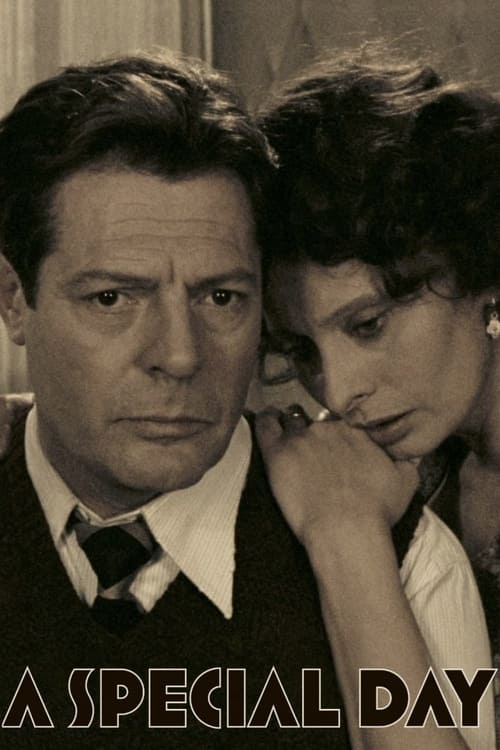
A Special Day
dir. Ettore Scola · 1977
In moments of connection, individuals can find meaning and escape from the monotony of their lives, revealing the profound impact of human relationships amidst societal turmoil.
"A Special Day" is a tender exploration of connection amid despair, where two souls find solace in each other on a day marked by historical darkness. With its poignant storytelling and rich emotional depth, it invites viewers to reflect on the power of love in the face of societal oppression.
Two neighbours — a persecuted journalist and a resigned housewife — forge a strong bond on the day of Adolf Hitler's historic 1938 visit to Rome.
Full synopsisspoilers
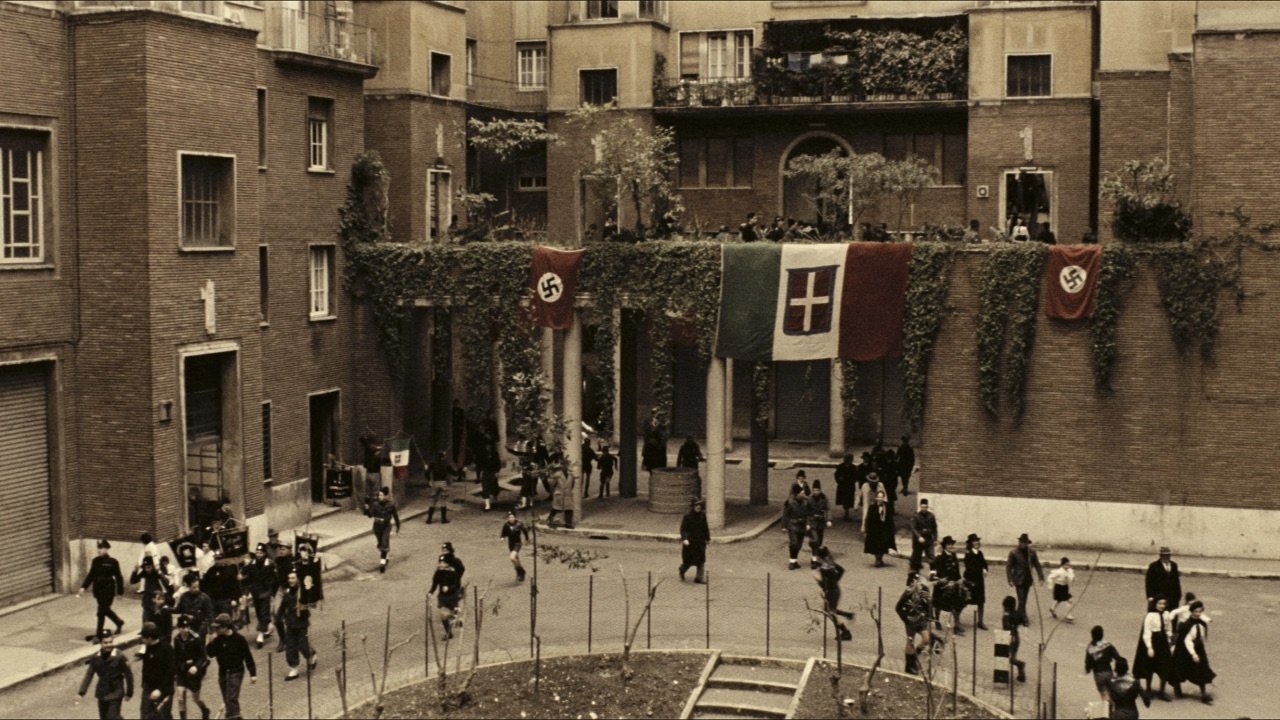
It's the late 1930's Rome. It's a national holiday in Italy today for the first state visit of Adolf Hitler to the country. The occasion is being marked by a lavish parade with both Hitler and Benito Mussolini to celebrate their political friendship/alliance in the name of fascism. Most of the Roman populace will attend the parade to celebrate with their leader.
Two that will not be are the following. Antonietta Taberi, who would have liked to have gone to the parade, has to stay at home to attend to her domestic chores in duty to her husband Emanuele and their six children, all who have gone to the parade without her. Gabriele is a former announcer on Italian Public Radio. Despite living in the same apartment complex (Gabriele only for the last two months) with their apartment windows facing each other across the courtyard, Antonietta and Gabriele meet for the first time today in Antonietta's need to access his apartment to retrieve her escaped myna bird.
Their encounter is important to both of them if only for this one day. It takes Antonietta out of her humdrum life, where she is unappreciated and taken for granted by her family, her husband who she does not truly love. And Antonietta's arrival halts what Gabriele was contemplating doing in light of the reason behind he not wanting to go to the parade and he no longer working as a radio announcer, that act which would replace the alternative of what will be happening to him later in the day.