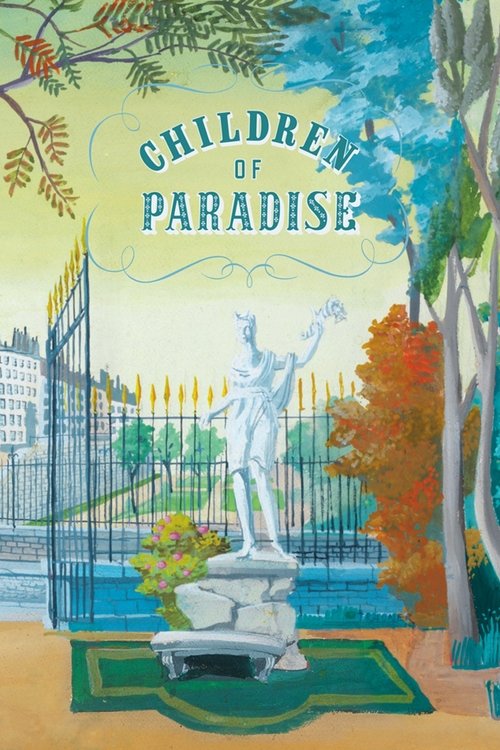
Children of Paradise
dir. Marcel Carné · 1945
The experience of love often brings both beauty and pain, revealing the complexities of desire and the heart's longing for what may never be fully attained.
"Children of Paradise" weaves a rich tapestry of romance and longing within the vibrant chaos of 19th-century Paris, where love is both a muse and a torment. Its lush visuals and complex character dynamics make it an enduring classic that resonates deeply with anyone who has ever experienced the bittersweet nature of love.
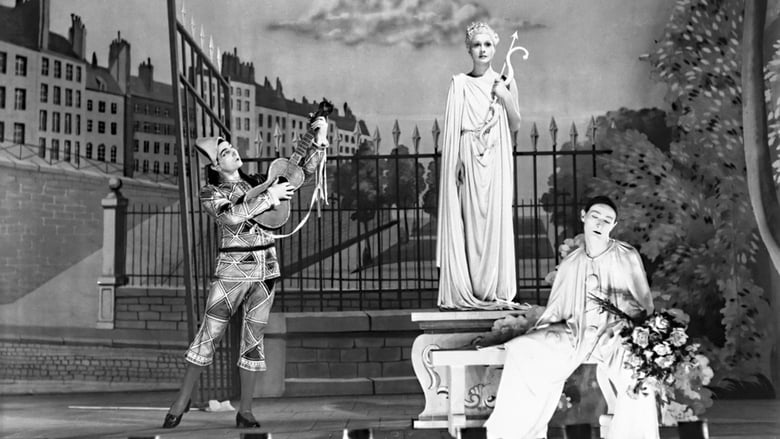
In a chaotic 19th-century Paris teeming with aristocrats, thieves, psychics, and courtesans, theater mime Baptiste is in love with the mysterious actress Garance. But Garance, in turn, is loved by three other men: pretentious actor Frederick, conniving thief Lacenaire, and Count Edouard of Montray.
Full synopsisspoilers
Strolling indolently around the 1830s vibrant Parisian avenue called the Boulevard du Crime, the graceful and elusive courtesan, Garance, finds herself wrongfully accused of pickpocketing. But, amid a sea of jugglers, sideshow performers, streetwalkers, and crooks, the silently eloquent mime, Baptiste, comes to her rescue, only to hopelessly fall for her. And just like that, love's sweet torture befalls the delicate pantomimist, as the insufferable burden of knowing that the object of his desire can never belong to anyone, will heartlessly haunt him for years to come. Many have tried to seize her heart--the flamboyant thespian, Frédérick Lemaître; the criminal dandy, Pierre-François Lacenaire, and the imperious but loveless Count, Édouard de Montray--however, Garance, after so many barren years, now seems to need only one man.
In the end, trusting a frail and modest rose is beautiful but cruel. Is there anyone who can accept the naked truth of an unrequited love?